
The Board Jeff Made for Jaws
It All Begins Here
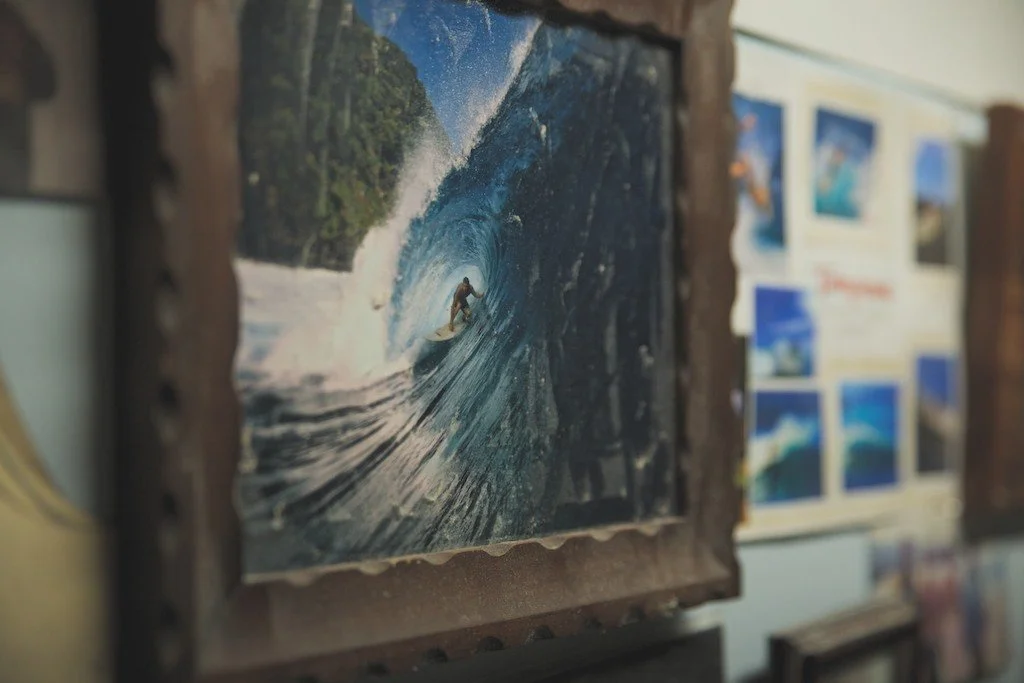
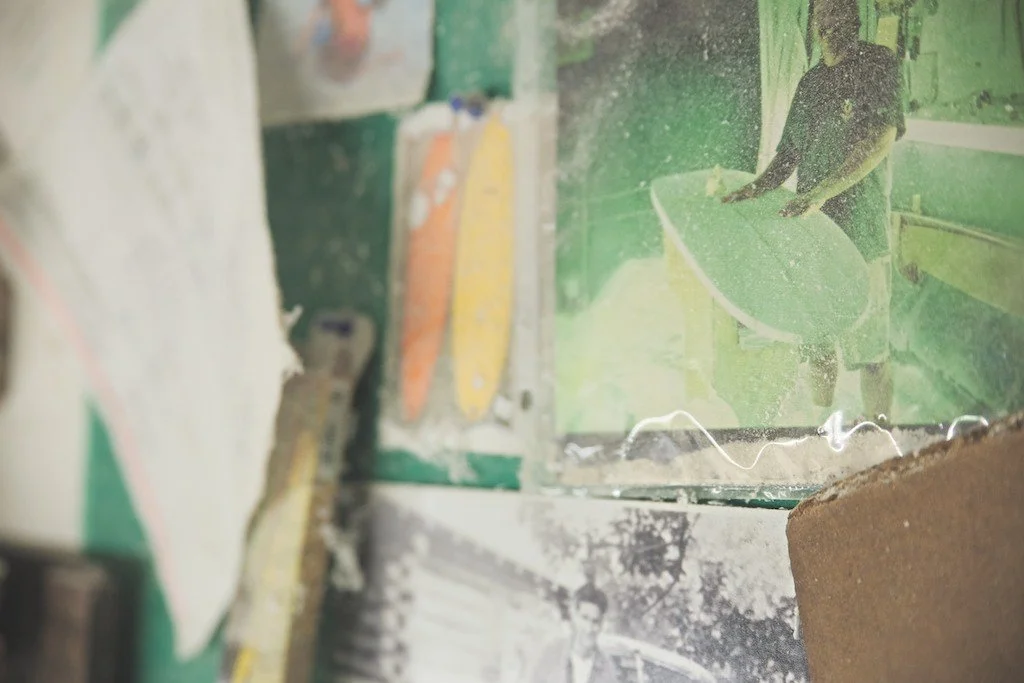
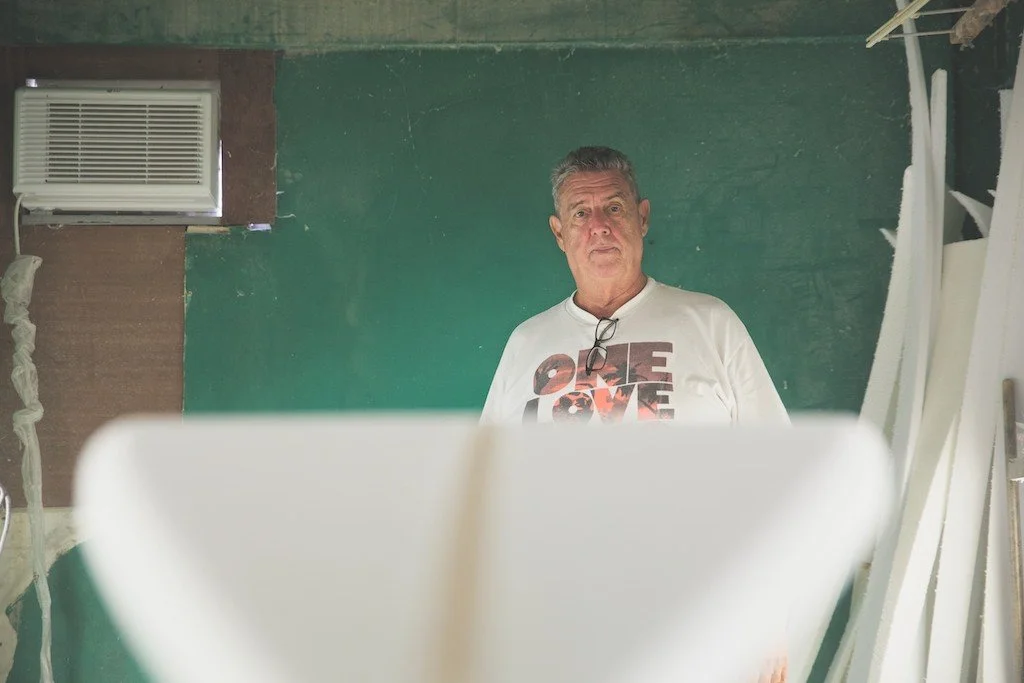
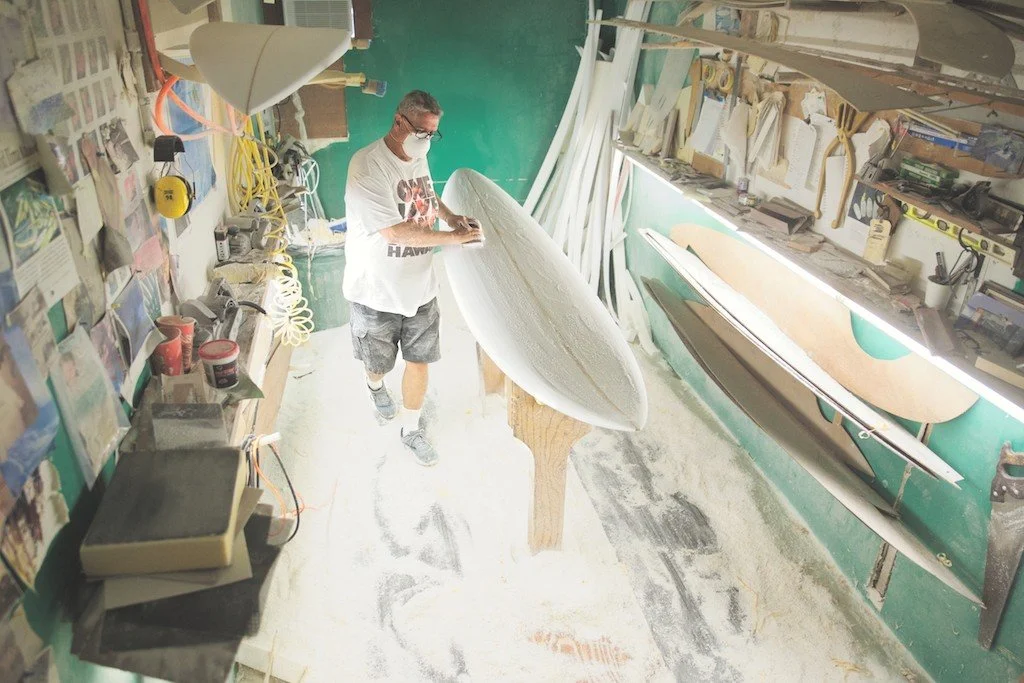
There's a photo on Jeff Timpone's wall. A surfer deep inside a barrel, somewhere in the Pacific. The frame is old, dusty around the edges. Everything in that shaping room has layers — foam dust, old photographs, decades of boards that passed through those hands on their way to some of the heaviest water on the planet.
I've been to that room more than once. But one visit was different.
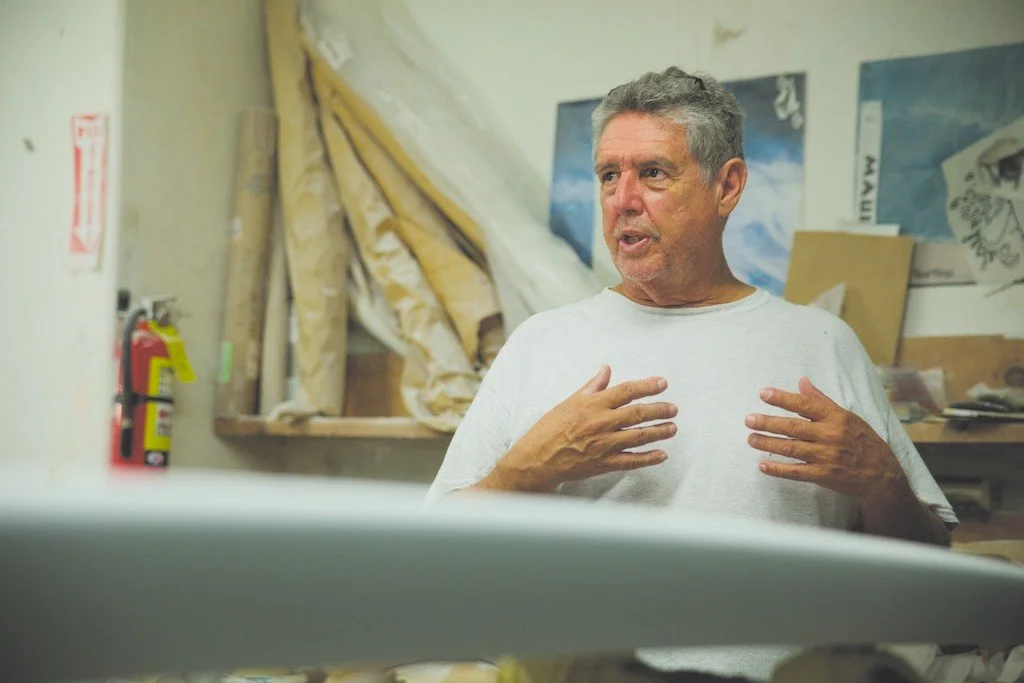
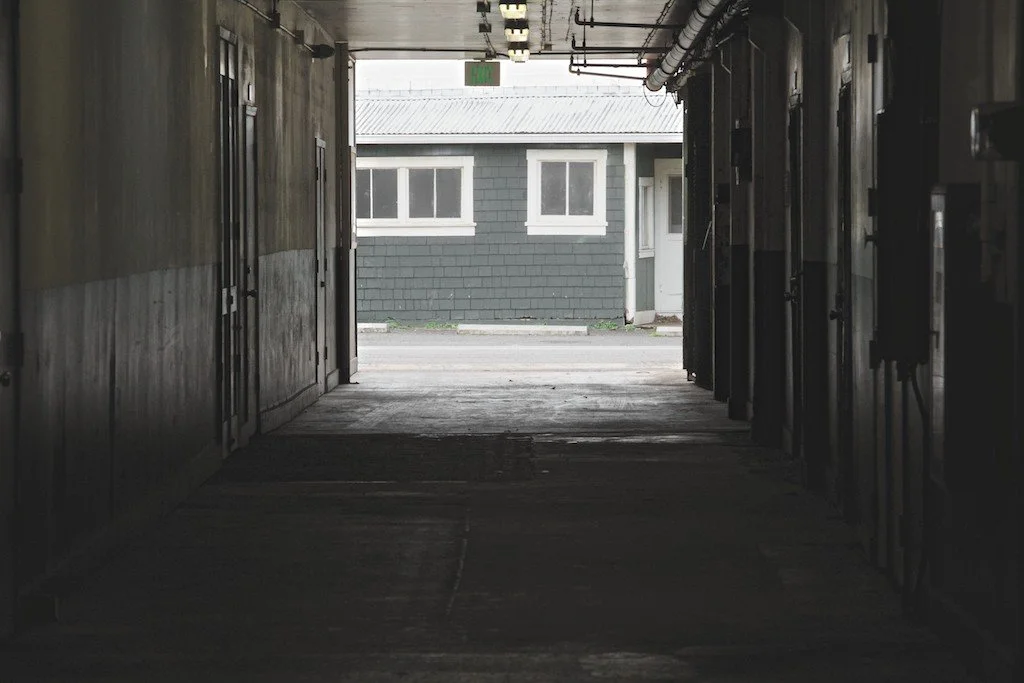
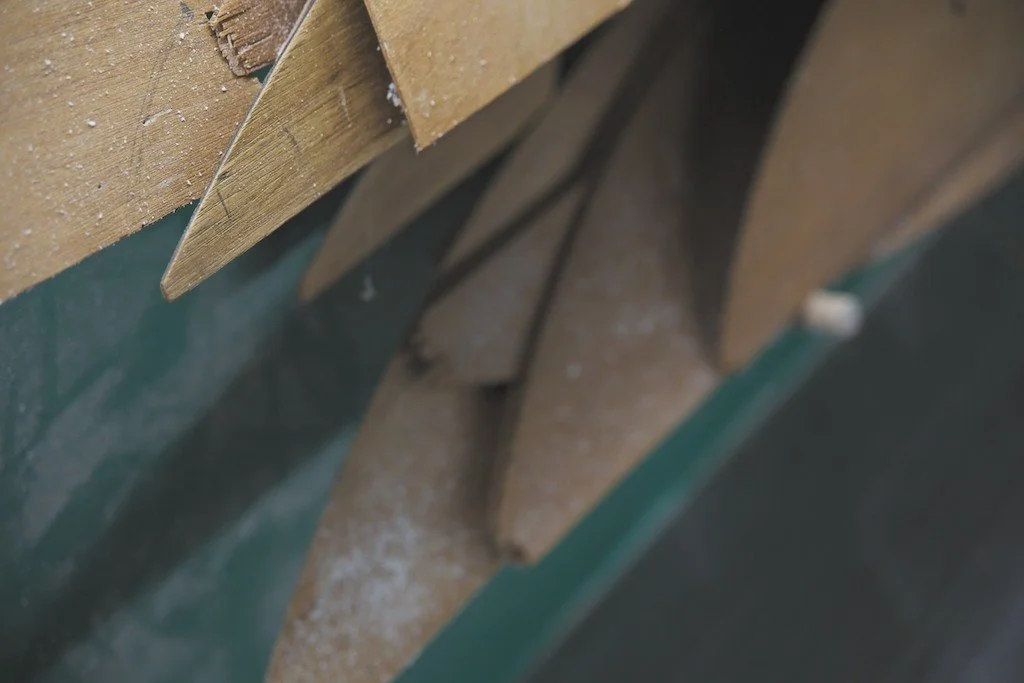
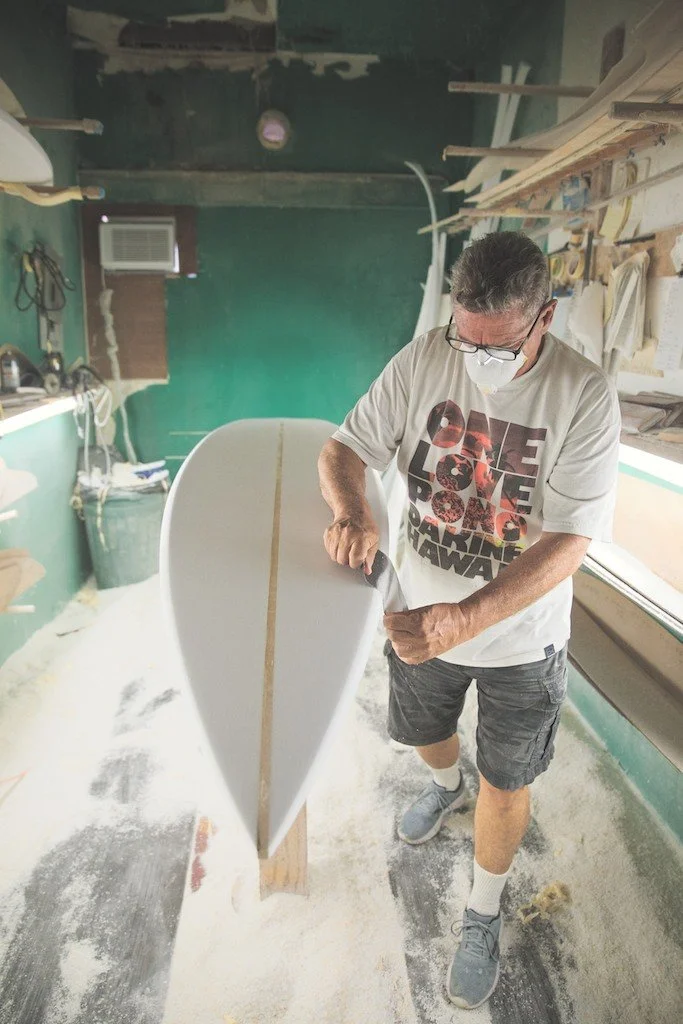
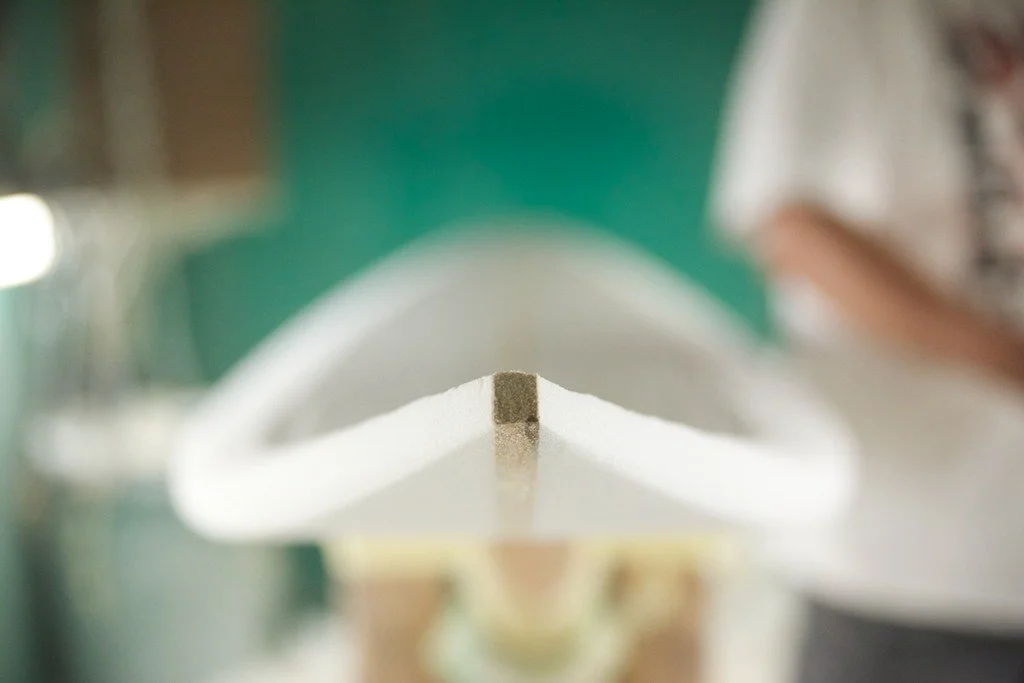
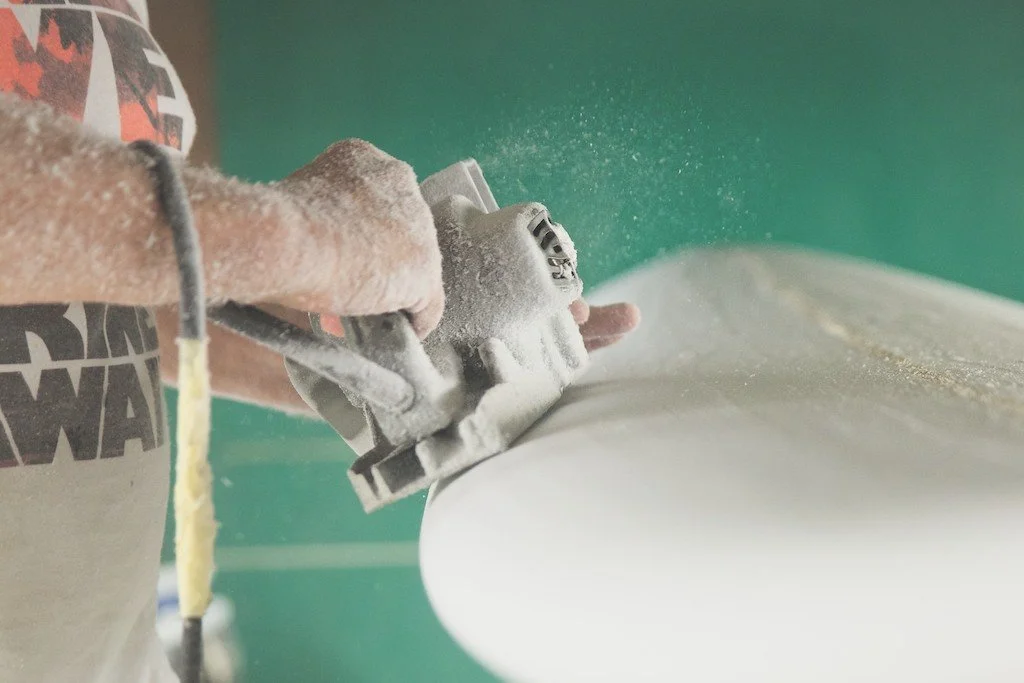
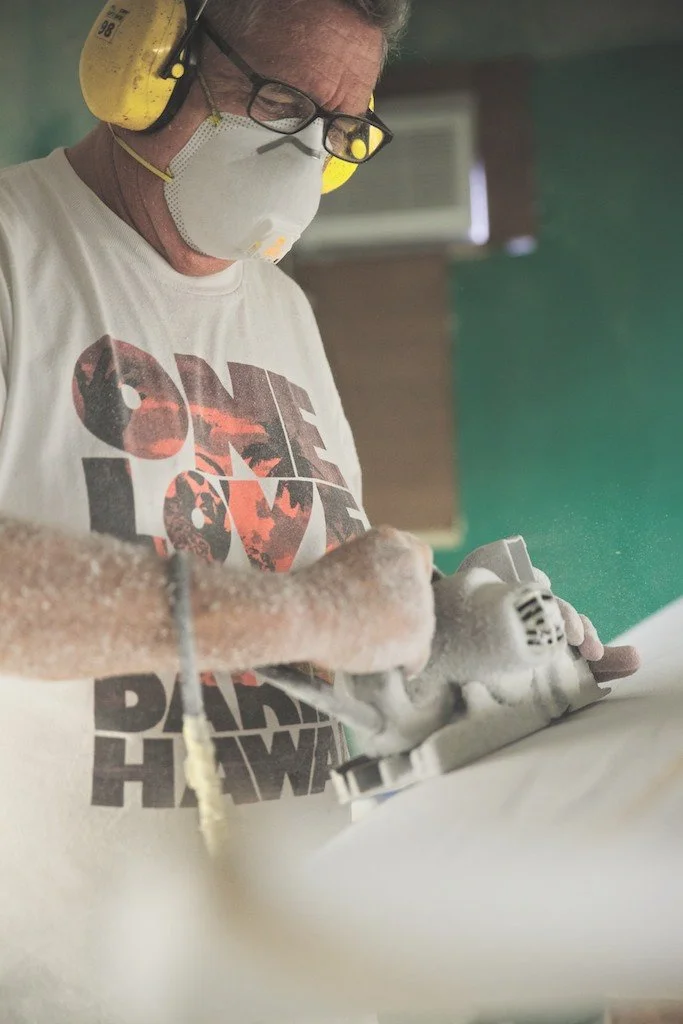
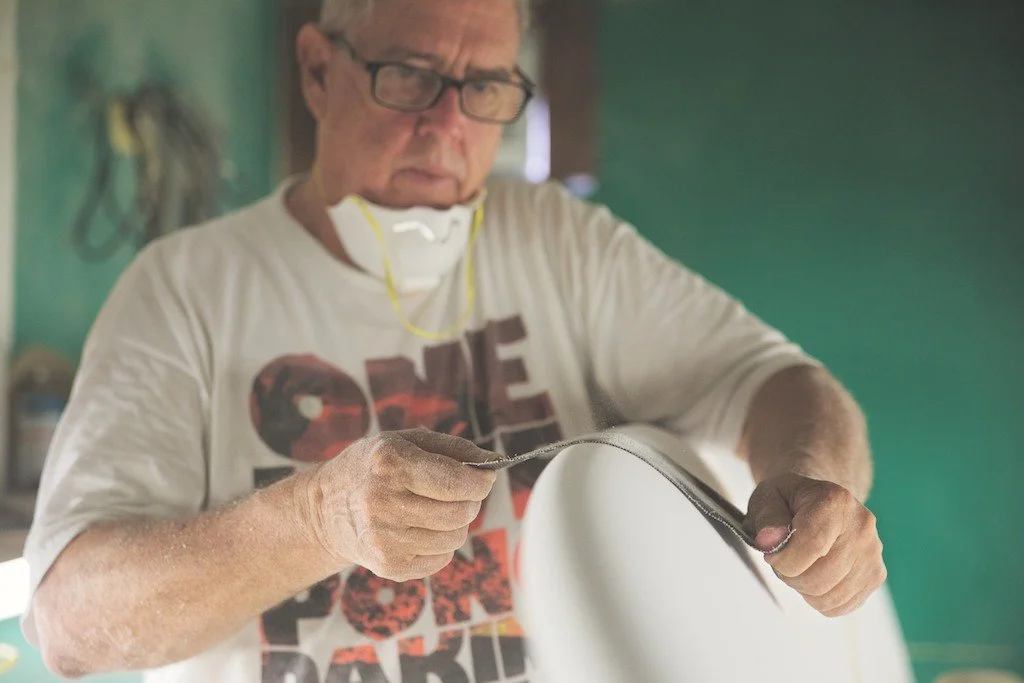
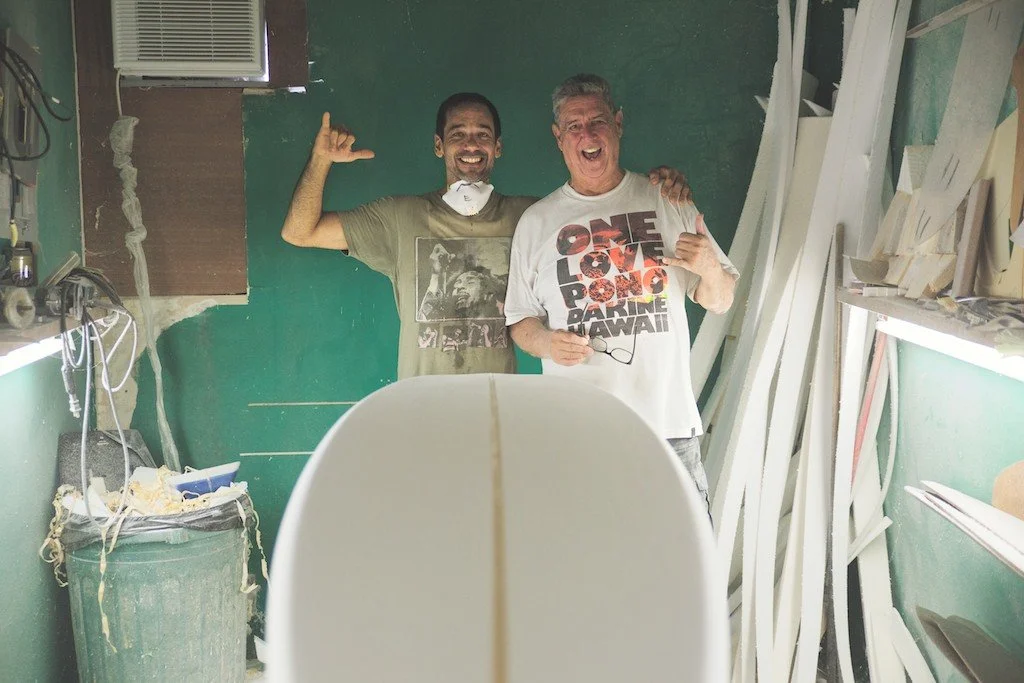
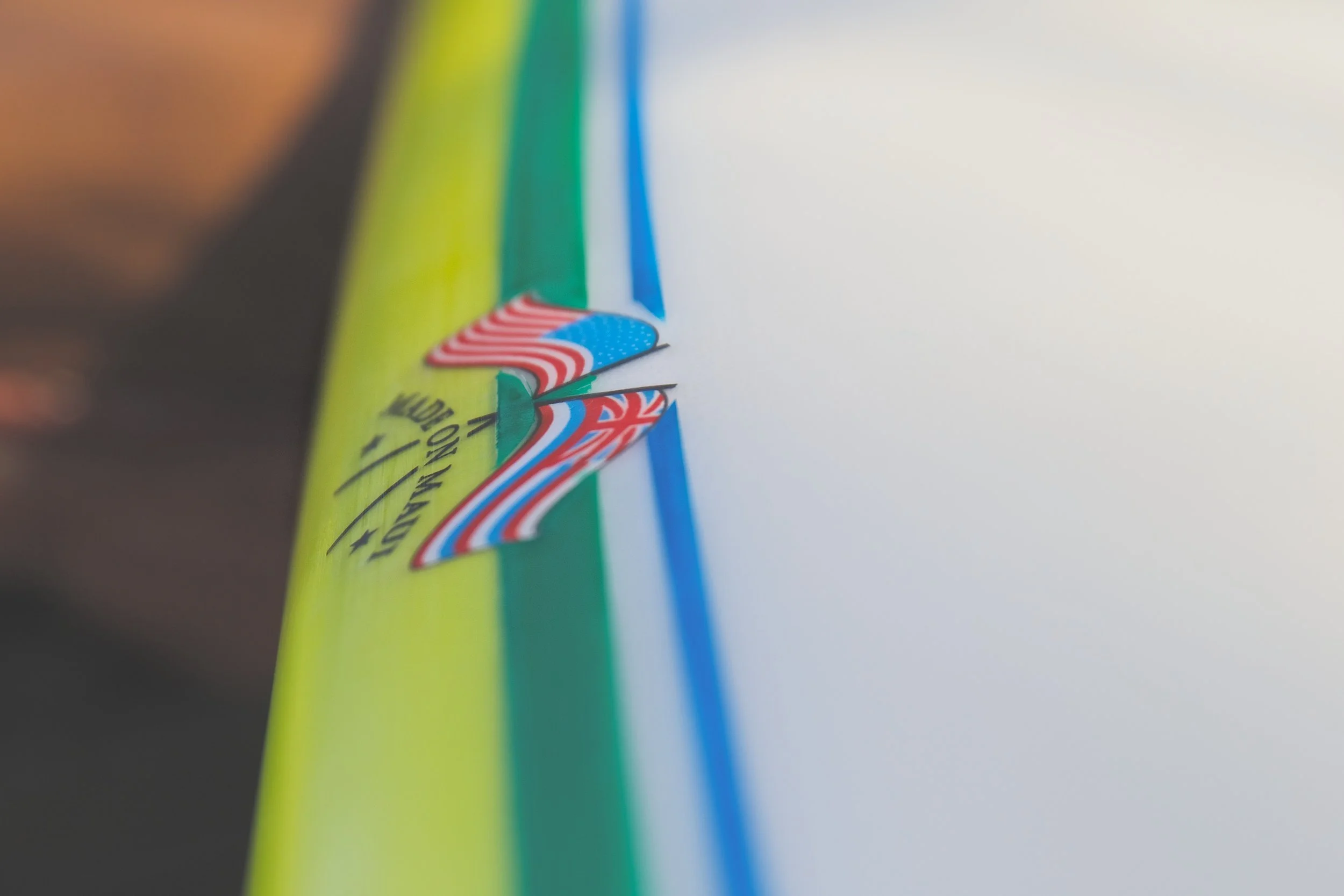
Jeff Timpone has been shaping surfboards on Maui for decades. His shop is at the Haiku Cannery — the kind of place you find by knowing where to look, tucked in alongside other shapers and makers who chose this island for reasons that go beyond real estate. The walls are covered with surf photos, stickers, pencil marks, old magazine cutouts faded by years of Hawaiian humidity. It's not a showroom. It's a workshop. A real one.
By the time I walked in to order this board, I'd already been surfing Peahi for a few years. My first time out I'd borrowed a 9'7" from Yuri Soledade — thin, fast, a board that had no business being under me but taught me what I needed to know. After that came a 10'6" shaped by Matt Parker of Album, an incredible board that broke multiple times before it was finally done. Now I needed something built specifically for where I was in my surfing — and where I intended to go.
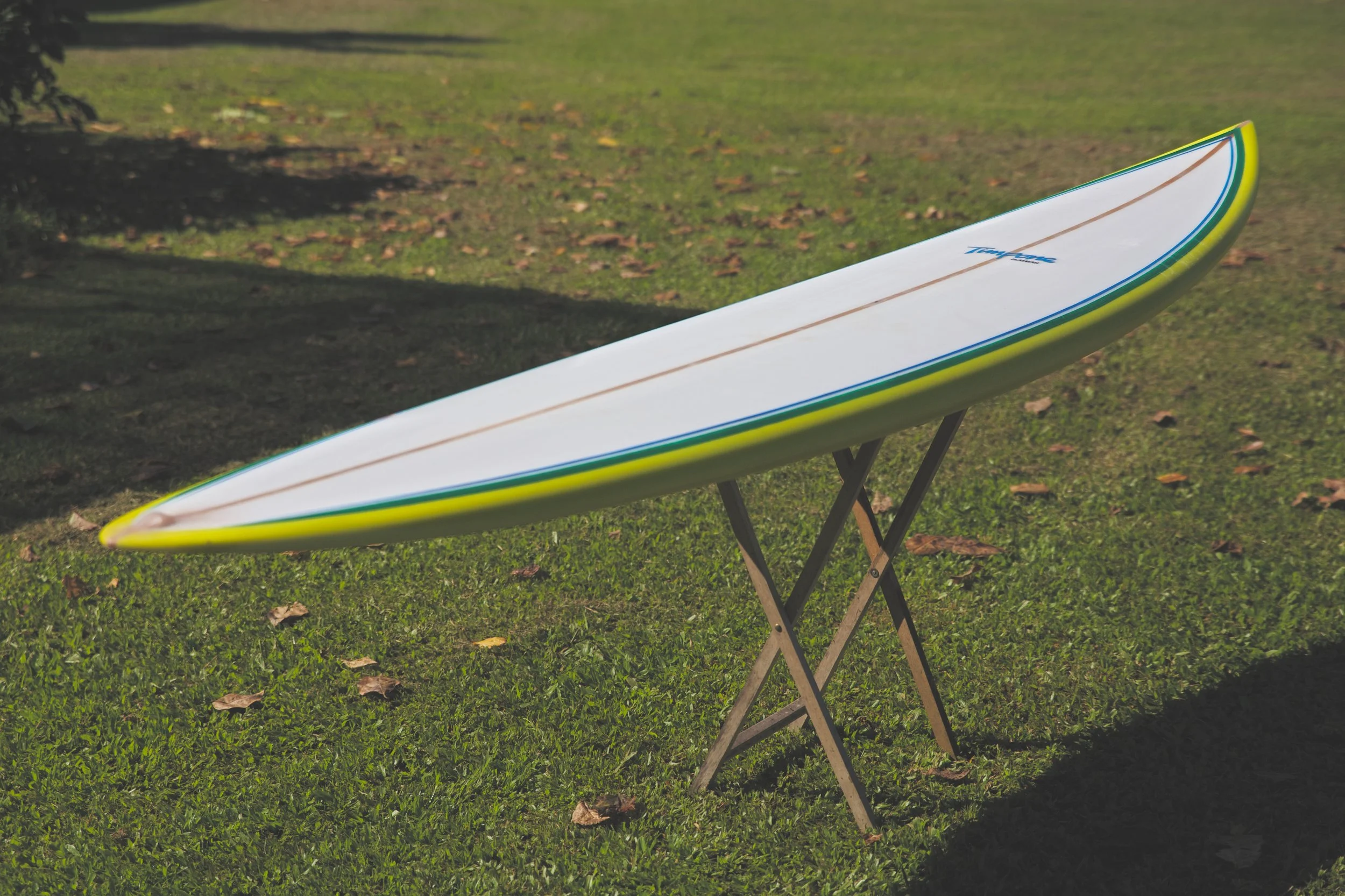
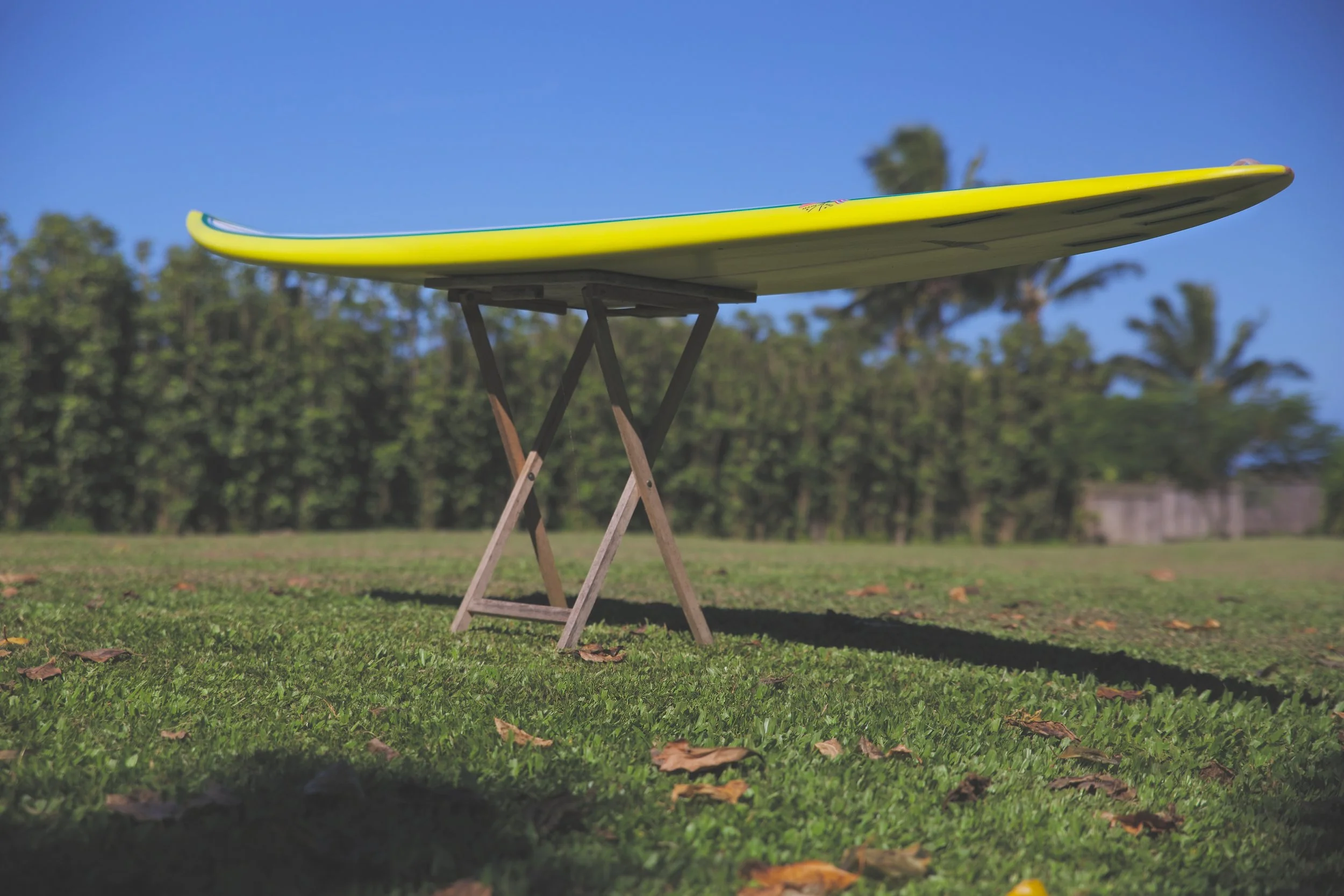
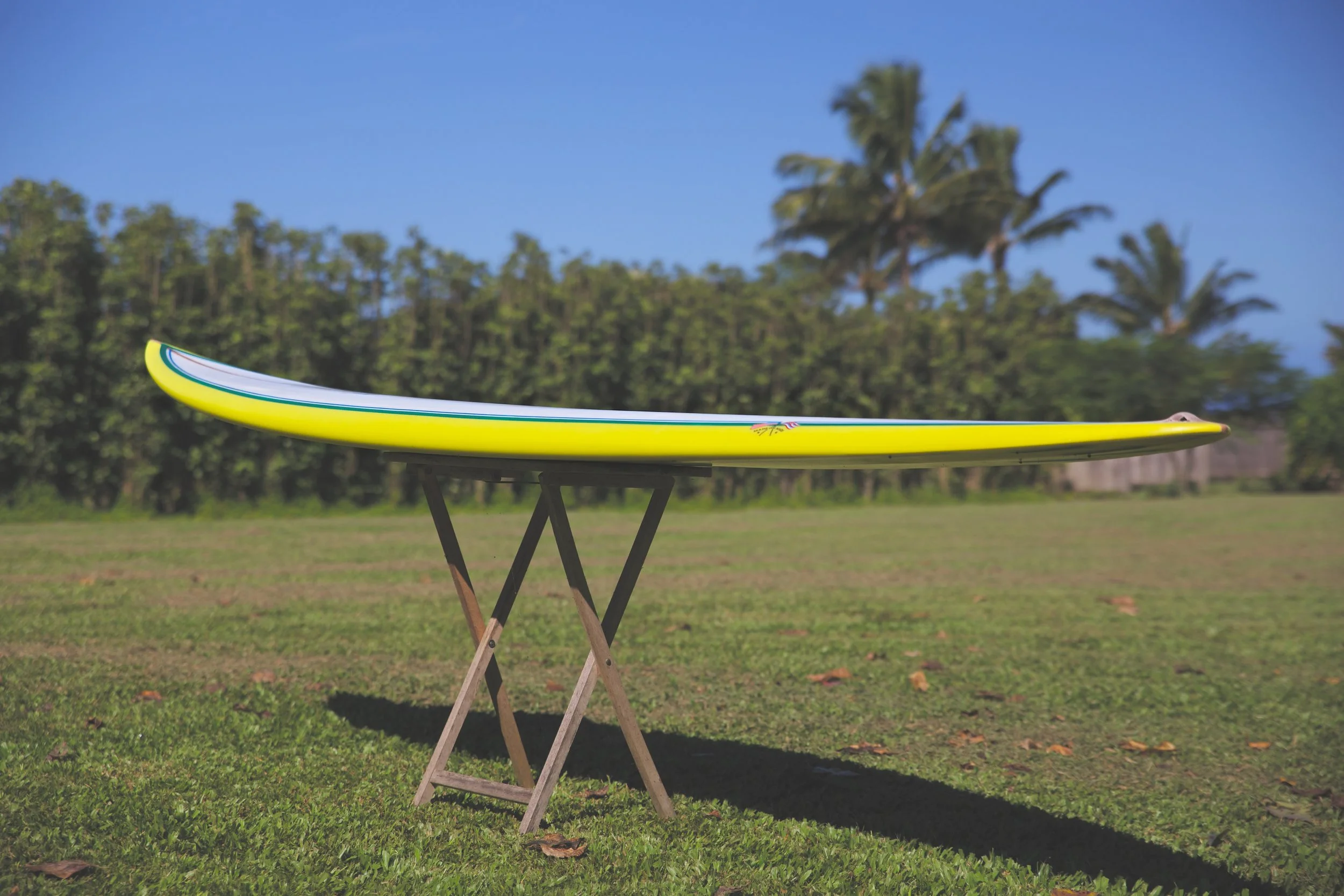
I wanted a 10'2”. Slightly thinner than conventional wisdom might suggest — more agile, but still heavy enough to hold a line in serious water. I'd thought it through.
Jeff listened. We talked about the wave, about the sessions I'd been having, about what I needed the board to do. Then he went to work.
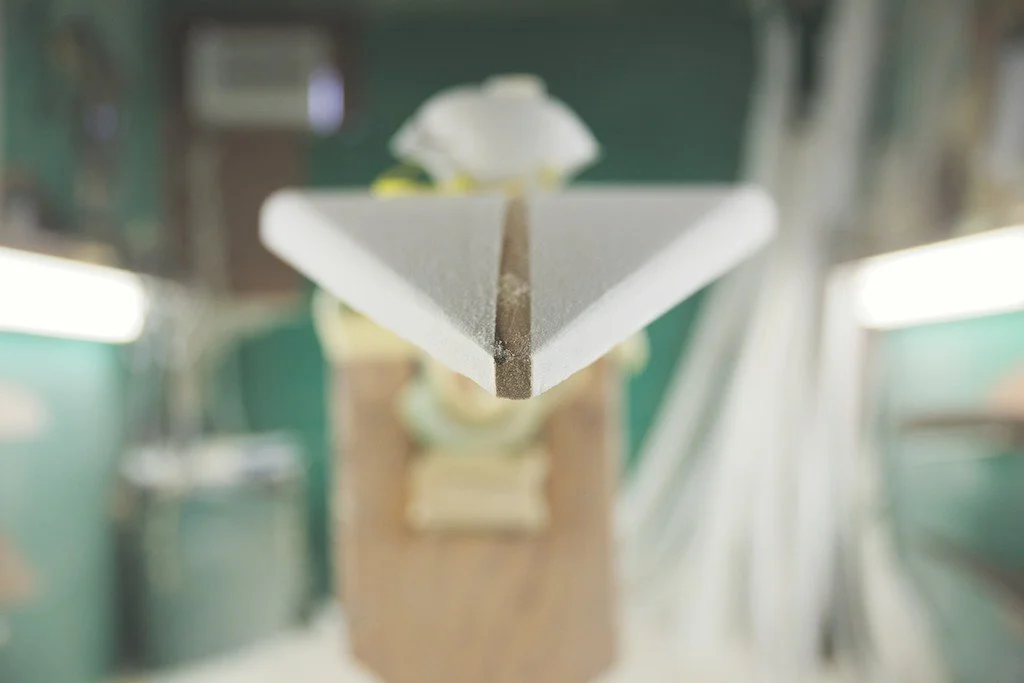
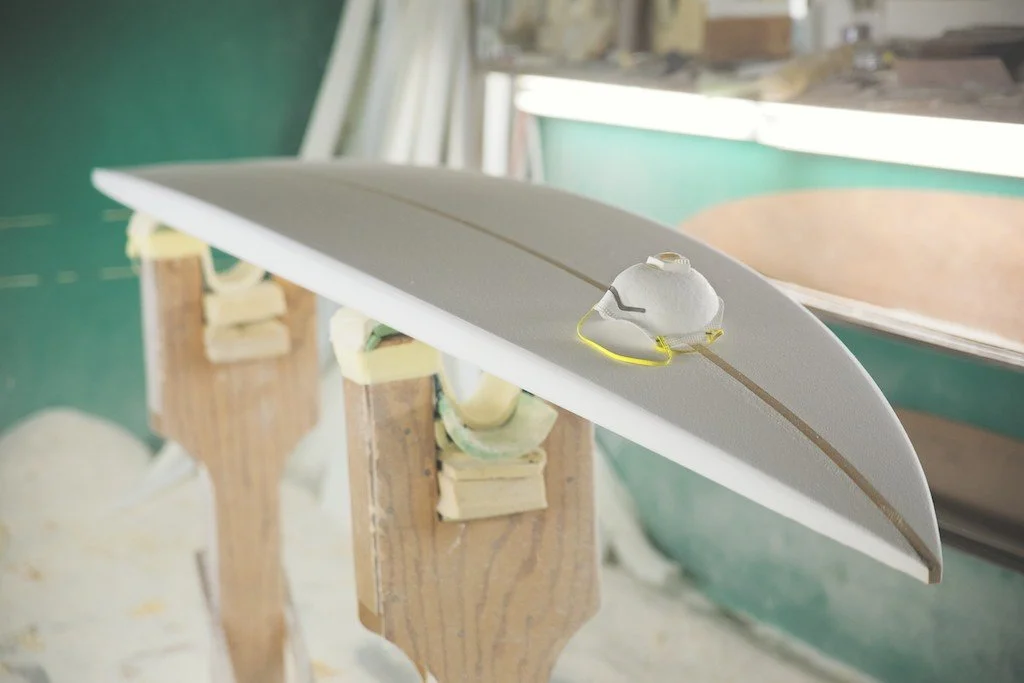
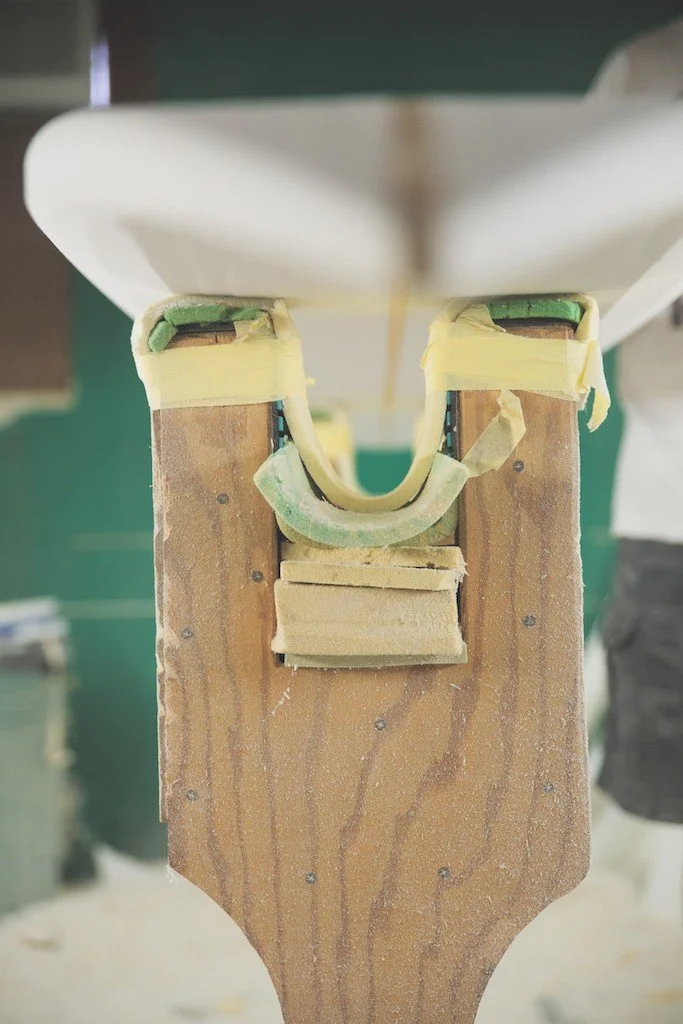
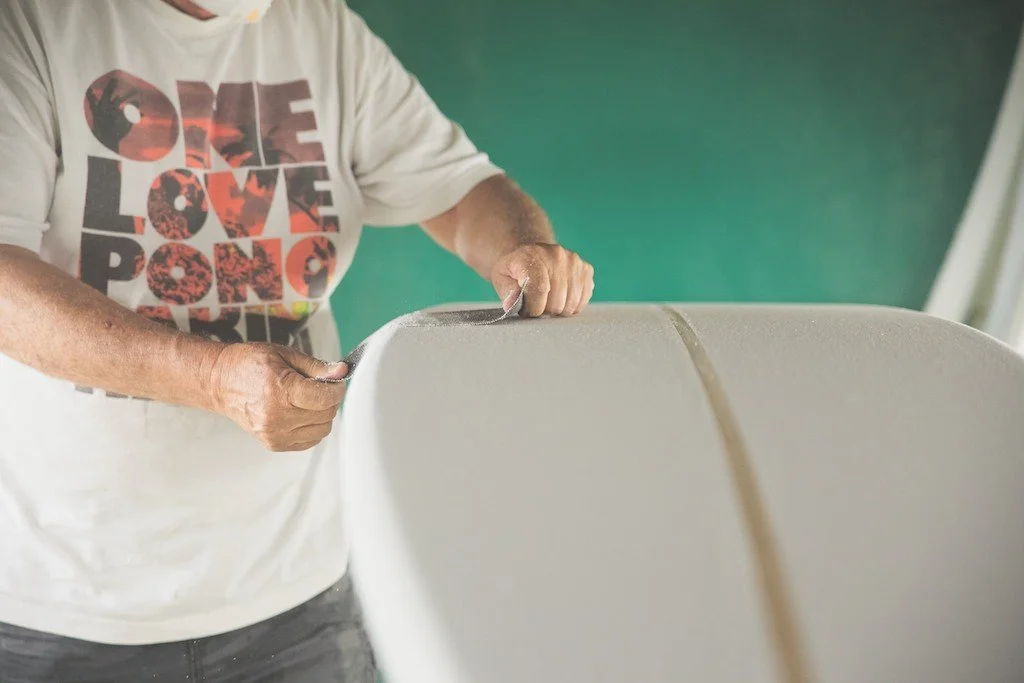
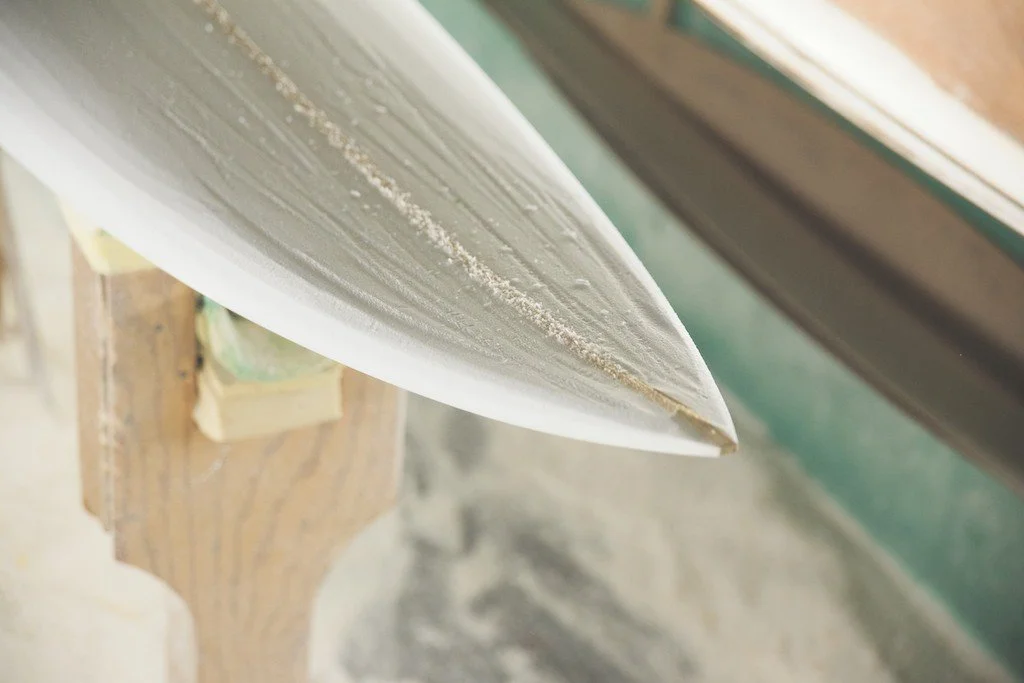
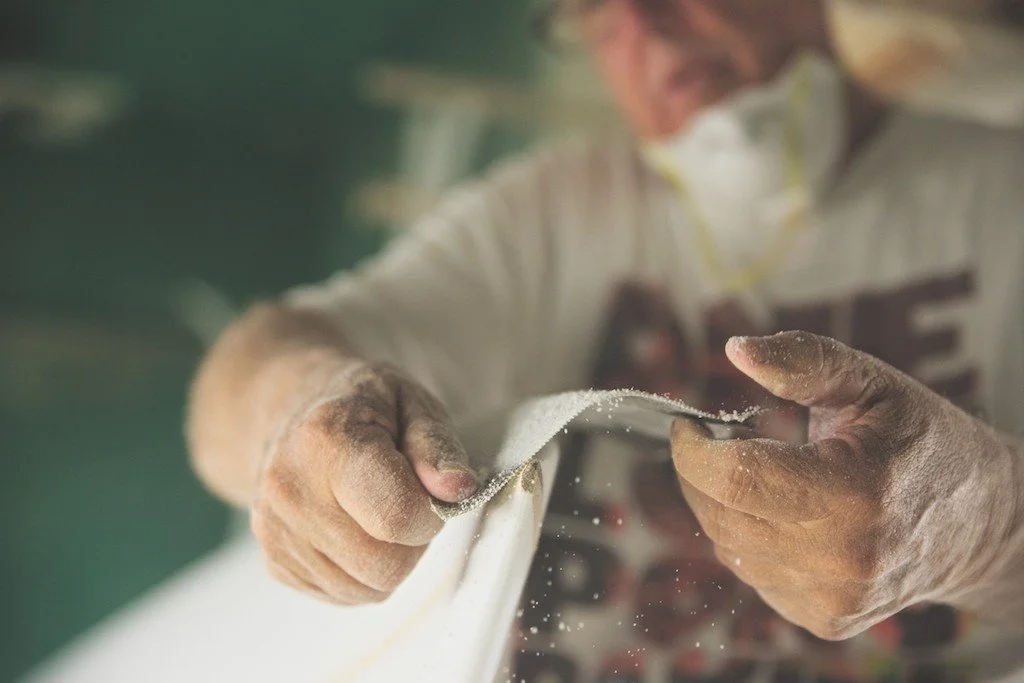
I watched him shape it. Watched the foam dust fill the air, the planer moving across the blank with that particular kind of focus that only comes from doing something for decades. His hands already knew what my words were trying to describe.
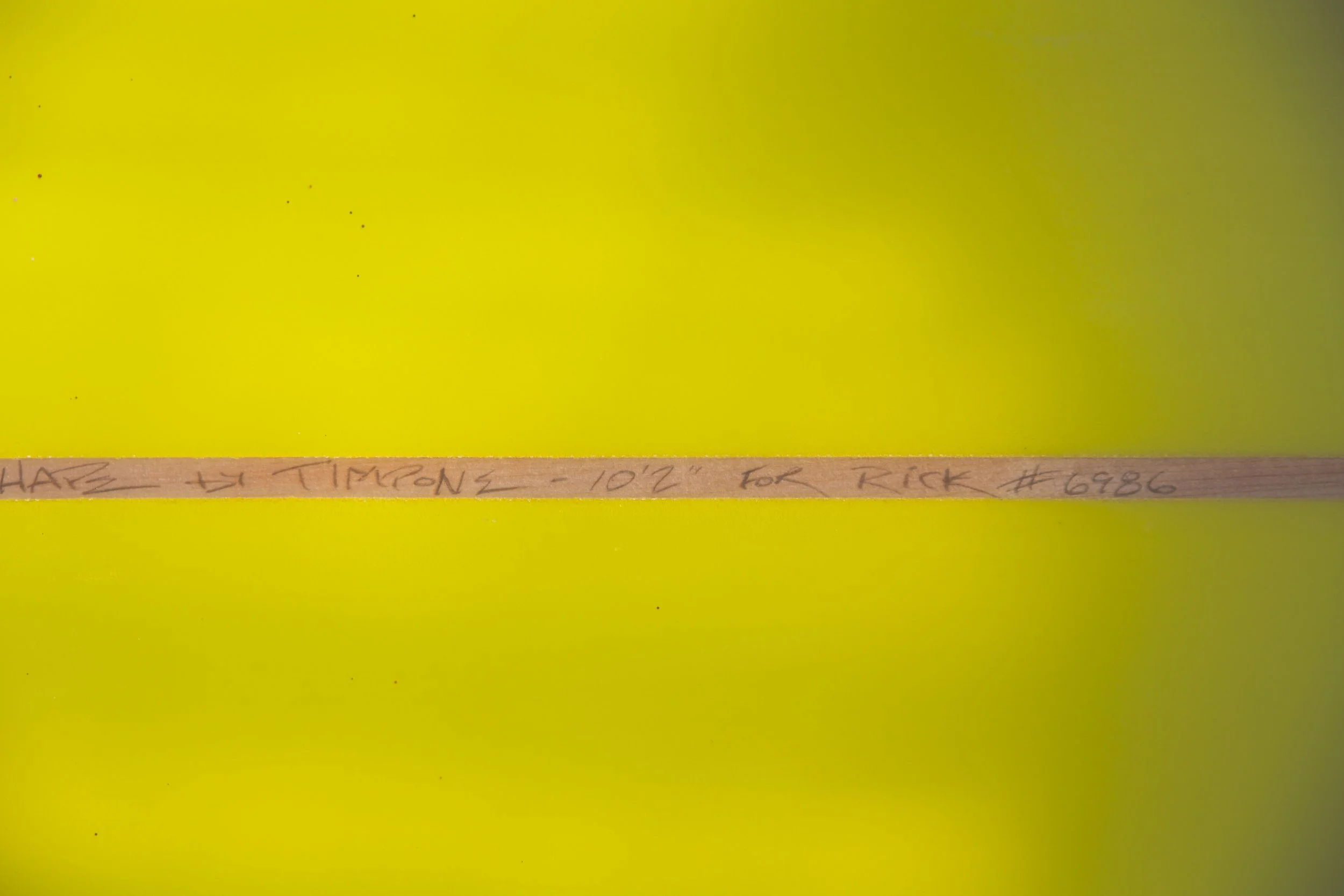
When it was finished, he wrote on the stringer in pencil:
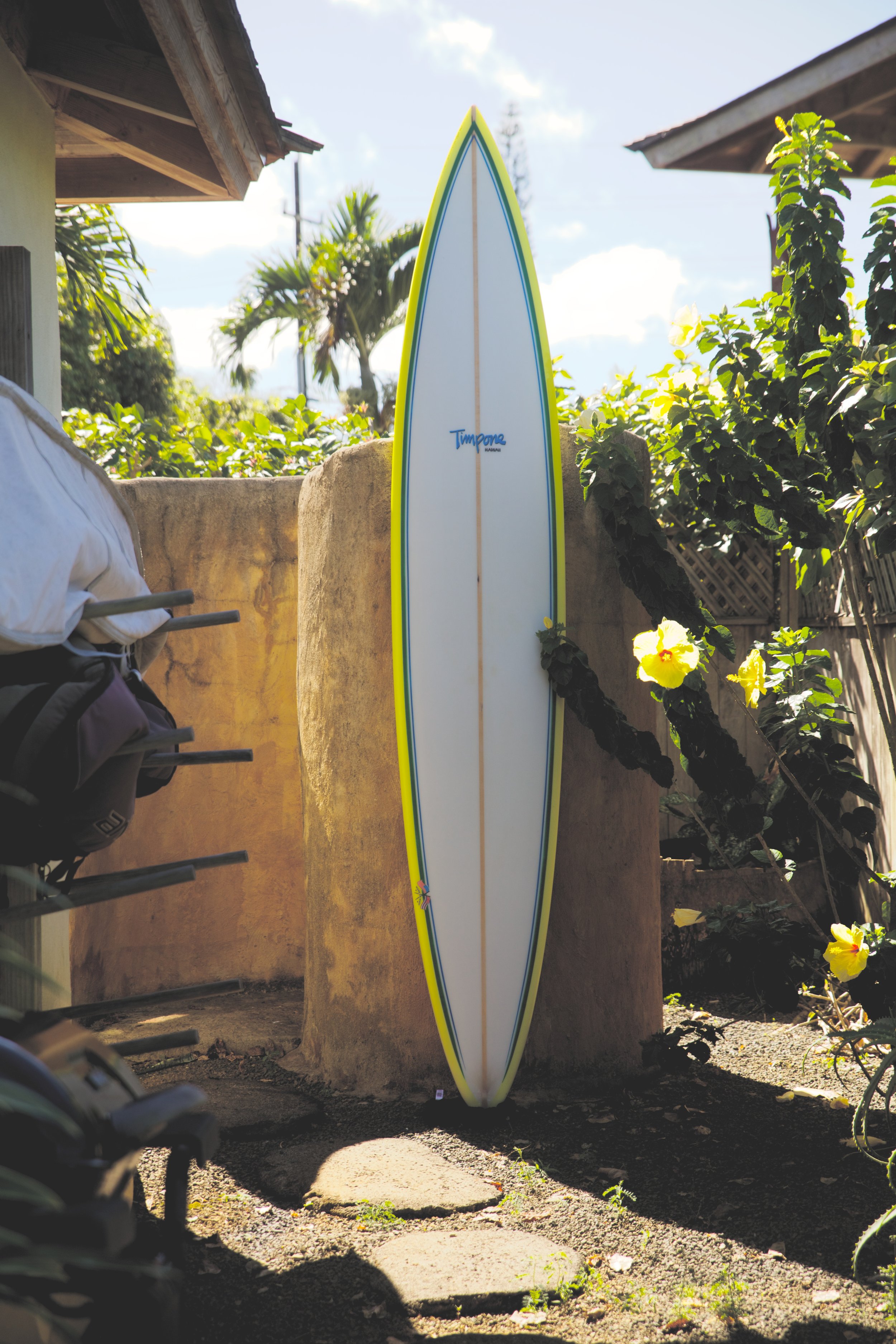
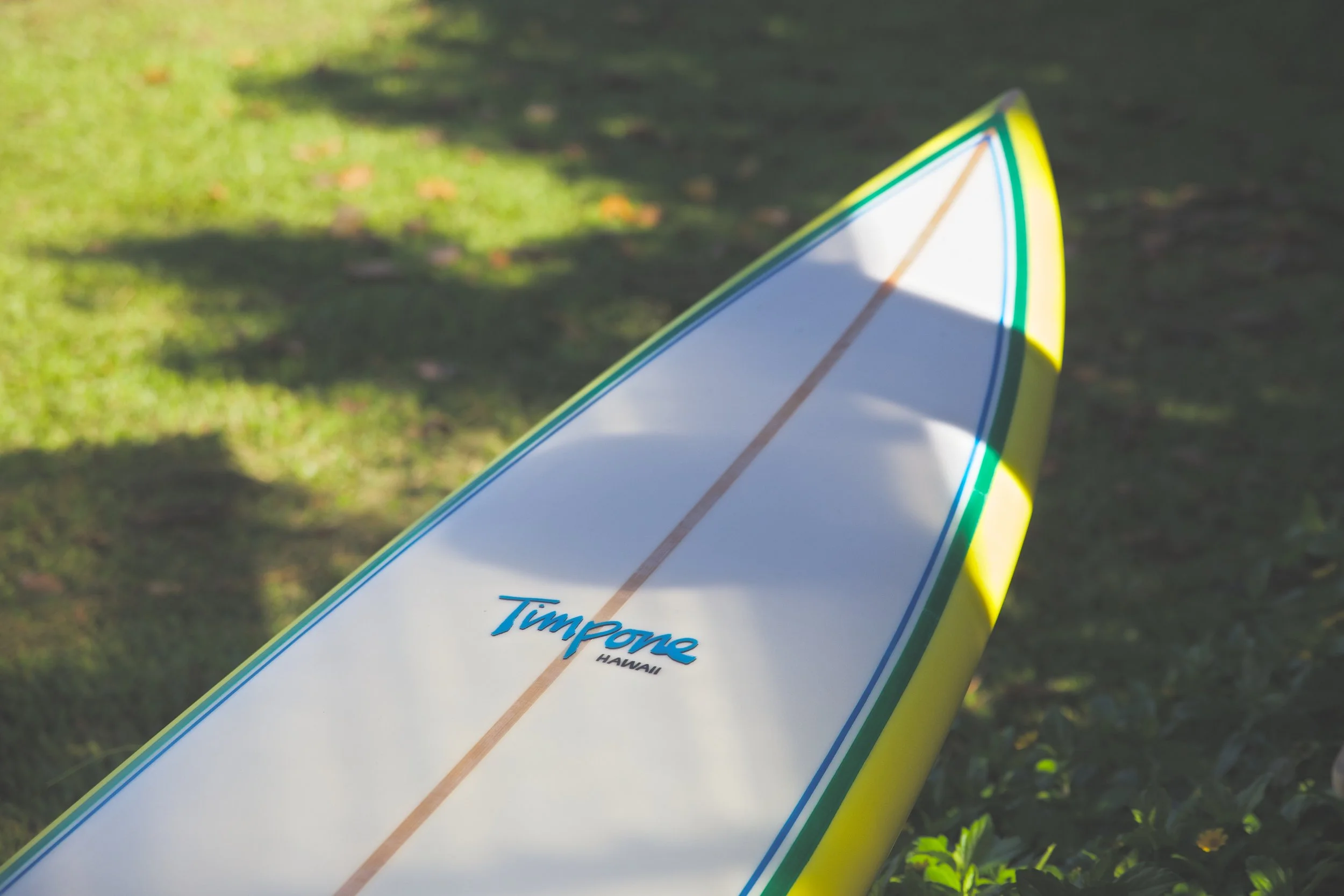
Shape by Timpone — 10'2" for Rick #6986
The first time I surfed that board was great.
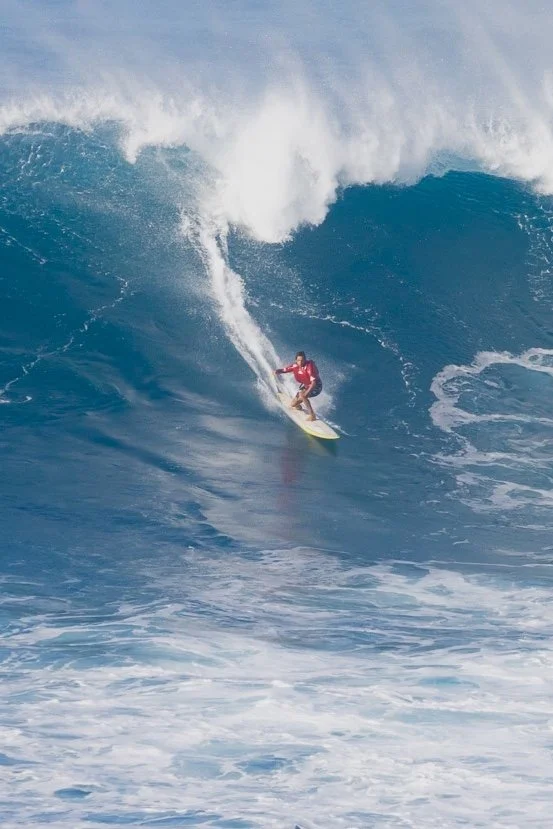
A rare day at Peahi — clean, no wind, 15-18 feet Hawaiian scale. The kind of day that doesn't happen often, and when it does, you feel it before you even get to the cliff.
I went out by boat for the first time, through the harbor with Daniel Goldberg. Daniel is one of the most respected watermen on Maui — big wave surfer, rescue instructor, founder of Peahi Hui (@peahi_hui), which has been running water safety and big wave coaching since 2000. He also goes out as a fisherman and brings fresh fish back to the community. The kind of person Maui produces that the rest of the world doesn't fully understand until they meet one.
Going by boat instead of the rocks changes everything. No burning energy on the entry, no adrenaline spike before you even hit the water. You arrive calm.
The board felt right from the first paddle. Stable, direct, cutting through the chop the way a gun is supposed to. When the first wave came and I dropped in, everything Jeff had built into that board confirmed itself. It held the line. It responded. It was exactly what I'd asked for.
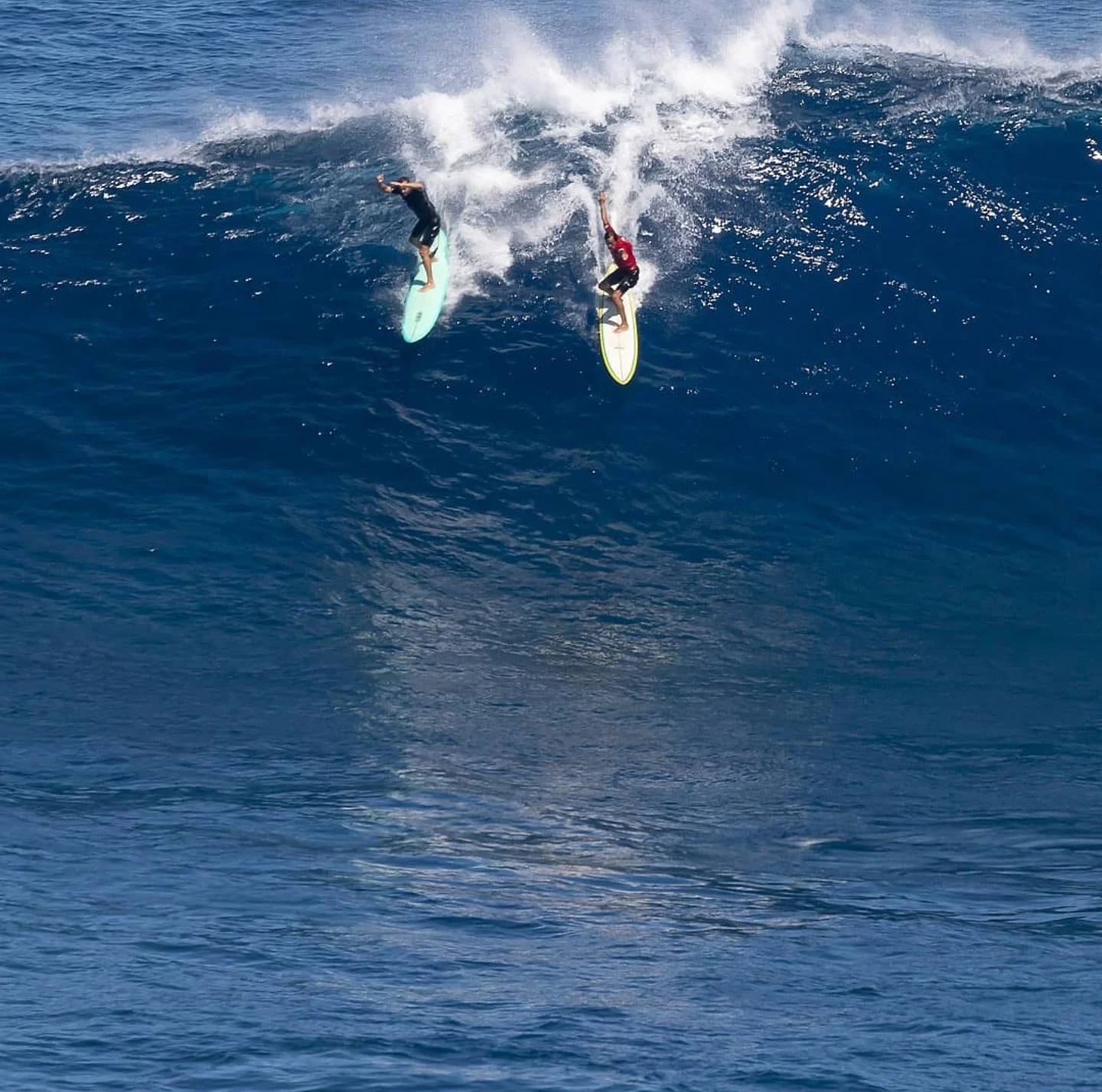
That same season, I shared a wave with my friend Ernesto Simões (@hawaiibahia). Ernesto is from Salvador, Brazil — like me — and had been invited to surf Jaws for the first time by Yuri Soledade that day. We hadn't planned it. We hadn't coordinated anything. We just ended up on the same wave, and somehow it worked — clean, almost choreographed, the way things sometimes do when the ocean decides to be generous. John Varney caught the whole sequence from the cliff. One of those moments that could never be planned and can never be repeated. We laughed about it afterward.
The season of 2019/2020 was building toward something.
I'd been coming to Peahi since 2015, incrementally. From the rocks to the boat. From borrowed boards to custom guns. I'd been doing dynamic breath-hold training. Yoga. Building the physical and mental foundation piece by piece.
I'd already tested the Quiksilver inflation vest in a previous session and knew how it worked — very different from just wearing foam for flotation. I was getting used to wearing those impact wetsuit vests.
January 23rd. The day arrived.
It was extraordinary — 20 feet Hawaiian, clean, perfect Peahi. I was ready. Psychologically clear. Light, not heavy. I understood the water, I trusted the board.
I paddled out from the boat and looked for my usual spot — between the West Bowl and the North Peak. Something felt off that day, the channel more crowded than usual. I repositioned and waited.
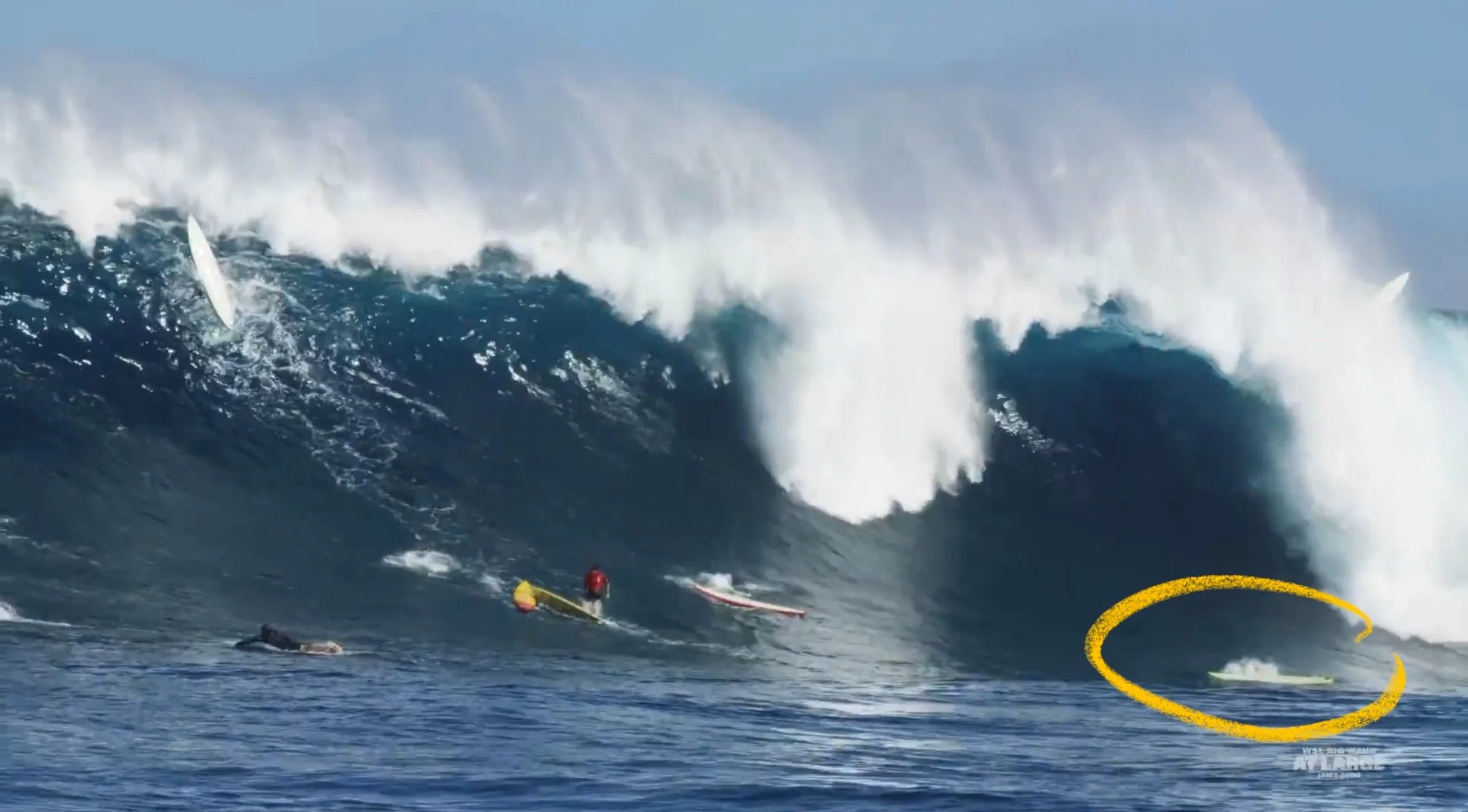
Then I saw a set coming. Bigger than the regular sets. I thought I was in the right position. I committed — paddled for the first wave of the set, convinced it was the right decision. It wasn't. I missed it. And when I turned around, the entire set was marching toward me. That decision, made in a fraction of a second, put me exactly where I didn't want to be.
When I turned around, the entire set was moving toward me.
I don't know what it's like to cross the event horizon of a black hole. But I imagine it's something close to what I felt in that moment — the point where choice ends and physics takes over.
Five waves, me and my board.
What followed was a different kind of chaos. The set pushed me toward shore, toward the rocks, toward the Peahi shore break — which is its own violence, separate from the open ocean. The rescue team mobilized immediately. Multiple jet skis moving fast in difficult conditions, coming at me one after another, trying to reach me before the shore break did.
I was exhausted. Not in a condition to help anyone help me. Each attempt was a risk — for them, not just for me. They came anyway. All of them did their job under pressure, in conditions that don't forgive mistakes.
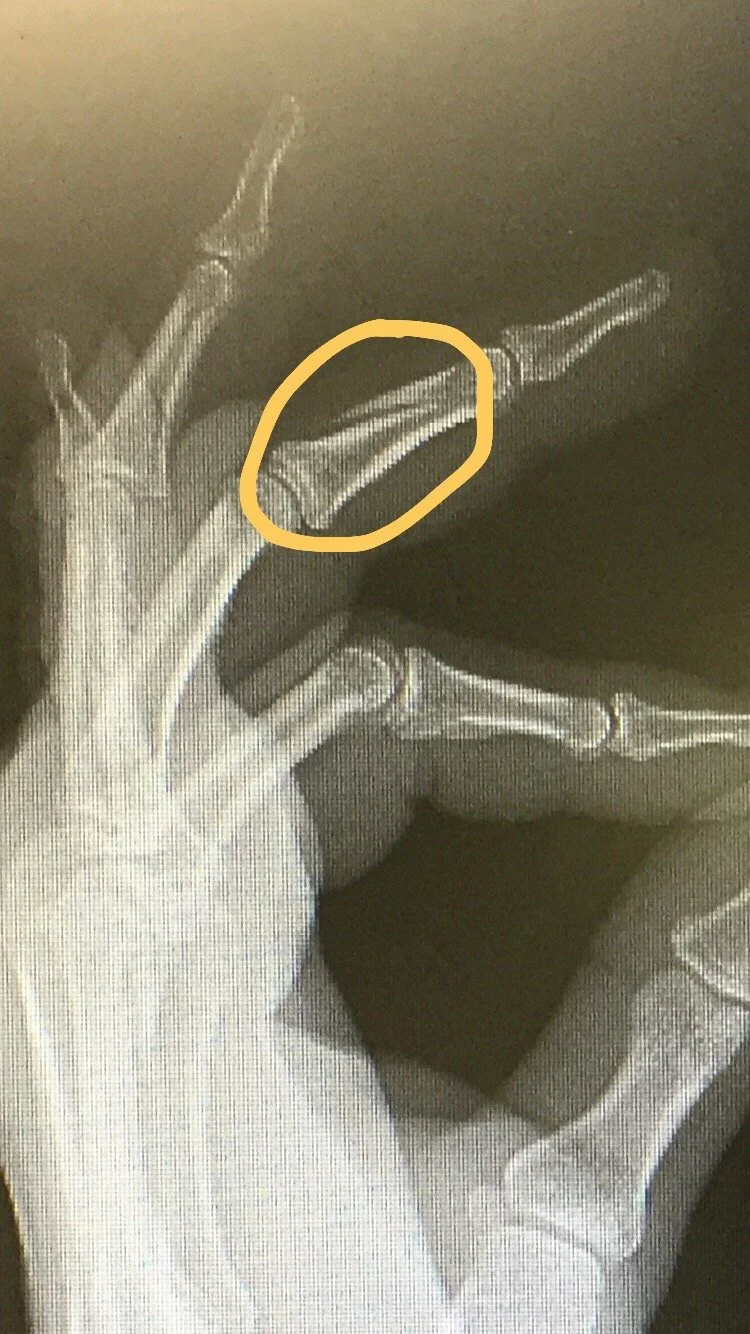
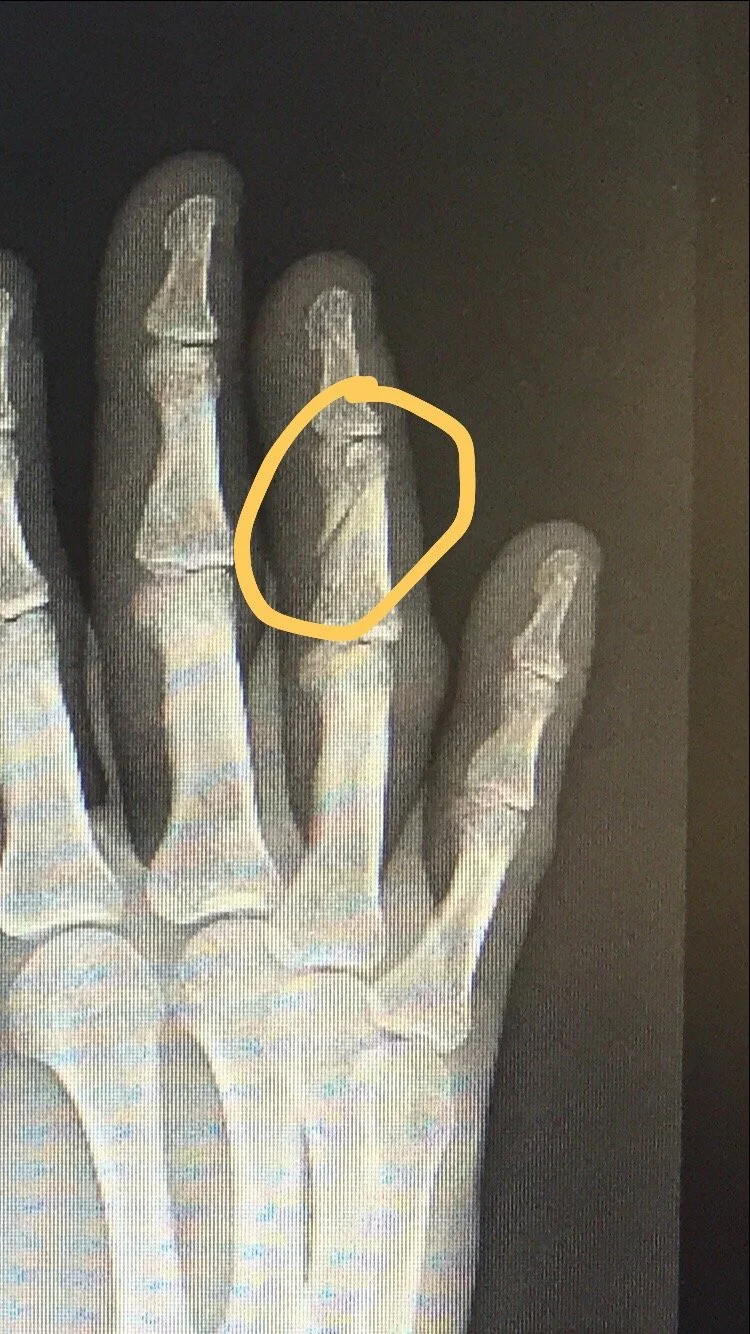
On one of the early attempts, a sled came alongside. I grabbed the rubber handles on the side — and when the driver accelerated, I didn't let go. My mistake. Four fingers broke.
There was a moment of shock. Then clarity. I was still in the water, waves still breaking around me. I straightened the fingers myself, right there. Set them as best I could. And kept going.
Eventually Kurtis Chong Kee reached me. Kurtis is one of the finest rescue operators on Maui, maybe anywhere — someone who had already pulled me out of difficult situations in previous sessions. Where others couldn't get me secured in those conditions, Kurtis did. There are people in this world who are exactly where they're supposed to be, doing exactly what they're supposed to do. Kurtis is one of them.
The 10'2" that Jeff Timpone shaped for me — the board with my name written on the stringer in pencil — was found later on the rocks. Broken in half.
Three experiences with the same board. The shaping room in Haiku. The opening session that winter at Peahi. And the day the ocean decided it was done.
Jeff is still shaping. The Haiku Cannery is still there. And somewhere on that wall, there's still a photo of a surfer inside a barrel, frame dusty around the edges, waiting for whoever walks in next.
Jeff Timpone has been shaping boards on Maui for decades. His shop is at the Haiku Cannery.Daniel Goldberg is the founder of Peahi Hui (@peahi_hui) — water safety, rescue training, and big wave coaching since 2000.Ernesto Simões (@hawaiibahia) is a Brazilian big wave surfer based in Hawaii. Kurtis Chong Kee (@kurtischongkee) is a rescue operator based on Maui. All photos by Rick Brayner except surf photos at Jaws by John Varney (@varney.john) and Erik Aeder (@erikaederphotography). The wave breaking on me with yellow circle around shot by Marco Antonio Arellano (@aguatography)
TOMORROWRISE
A visual journal of light, movement and surf culture.
Where faith, art, and the ocean meet the human journey.
Tomorrowrise began in Barcelona — as a personal record of sunlight, rhythm, surf culture, music, and the quiet moments that shaped my creative path.
Over the years, it became the visual DNA of Squeeze The Light:
the way I see color, movement, photography, design, and the feeling of standing on the edge of something new.
These images live where memory and vision meet —
waves, streets, shadows, sound, freedom.